From Digital Clipart to Real-World Embroidery Stitches
When you’re scrolling through a marketplace for the next design to stitch, you’re not just looking for a graphic. You’re looking for a potential project partner, something that will translate beautifully from screen to fabric and hold its own in a finished product. That’s the lens I use when evaluating something like Football Jersey Doodle Clipart.
A Hand-Drawn Heart: The First Impression
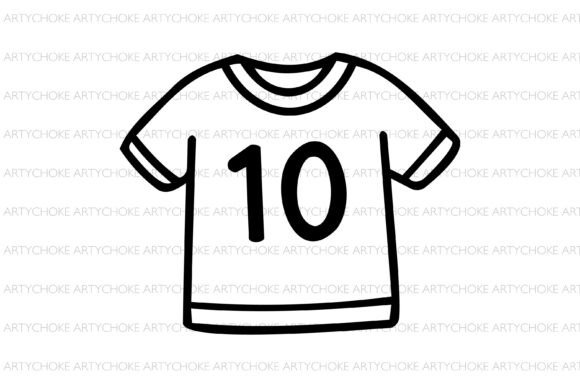
The first thing that strikes you about this doodle is its genuine, playful feel. It’s not a rigid, technical schematic of a jersey; it’s the kind of sketch you might doodle on a notebook while thinking about game day. That hand-drawn personality is its greatest asset. It creates a mood of casual fun, nostalgia, and lighthearted sports enthusiasm. For an embroidery designer, that means it’s not destined for a formal team uniform replica, but rather for projects where warmth and charm are the goal.
The shape is clear and iconic, instantly recognizable as a football jersey. The layout is simple and centered, which is a gift for hooping and placement. The detail level is thoughtfully minimal: the suggestion of sleeves, a collar, and the classic body seams. There are no tiny, intricate details that will vanish or become muddled in stitching. This tells me the design has been considered for application, not just for digital viewing. Its visual personality is friendly and approachable, making it feel like a natural fit for personalized gifts, children’s items, and casual fan merchandise.
Where This Doodle Shines in Stitched Form
I immediately picture this on a custom tote bag for a soccer mom, or embroidered onto the corner of a cozy blanket for a young fan. Its cheerful, unpretentious style makes it perfect for baby clothes or nursery decor—a little jersey on a hoodie or a pillow cover. For small business owners, this is a prime candidate for holiday gifts like embroidered tea towels or aprons for the sports enthusiast in the family. It would translate beautifully to a patch, which could then be applied to a cap or backpack.
On a sweatshirt or t-shirt, it would act as a great accent piece, not a dominating logo. It’s the kind of design that enhances a product’s giftability and handmade presentation because it feels special and specific, not mass-produced. For Etsy sellers and craft fair vendors, it could anchor a whole line of sports-themed kitchen towels, pillow covers, or baby bibs, creating nice brand consistency. In a boutique setting, an embroidered jersey on a simple canvas tote elevates the product from generic to curated.
Even in digital realms, this doodle holds value. For digital product sellers creating printable mockups or using it in previews for custom apparel services, the clear, friendly shape communicates the product idea instantly to potential buyers, boosting engagement and trust.
The Practical Stitching Considerations
A design’s true test is how it behaves under the needle. The open, clean lines of this doodle suggest it will stitch out with good clarity. However, its success depends entirely on your embroidery savvy. On dark fabrics, you’ll need to think carefully about thread color contrast—a white or bright satin stitch for the jersey body might pop beautifully. The design’s simplicity means it likely won’t require excessive stitch density, which is good for stretchy fabrics like t-shirts, helping prevent puckering if you use the correct stabilizer.
I would be cautious on very textured fabrics like some blankets or towels, where the clean lines might get lost. Similarly, on curved surfaces like caps, the symmetrical shape might need careful positioning to look centered. The lack of tiny details is a relief; there are no miniature letters or numbers that would become a blur of stitches, making it suitable for a range of hoop sizes, though I’d avoid going too small where the basic shapes might lose their definition.
For products meant for frequent washing, like kitchen linens or kids’ apparel, the design’s solid, uncomplicated areas are a plus—they’re less likely to fray or degrade compared to overly complex fill stitch regions.
Designer Notes for a Smooth Project
- Always test on scrap fabric first. Use the same material and weight as your final project. This tells you everything about thread tension and stabilizer needs.
- Check how it looks in both black and white mockups. Does the form hold up without color? This is crucial for understanding its core shape.
- Compare a stitch-out on light and dark fabric backgrounds. You might discover you need to adjust thread palettes for different applications.
- Since the product description lists uses like shirts and mugs, it’s clearly intended for finished products. However, always confirm the licensing for yourself before selling commercially. Does it allow for physical product sales? Digital resale? Don’t assume.
- For personalized gifts, this doodle would pair wonderfully with a name or number added in a complementary font, creating a custom piece that feels cohesive.
The Final Verdict for Your Business or Hobby
Football Jersey Doodle Clipart is more than a graphic; it’s a versatile, mood-setting tool for makers. Its hand-drawn charm translates into stitched appeal, offering a professional yet friendly look that elevates handmade products. It builds customer trust through its clarity and recognizability. For the crafter, it reduces stitching anxiety by being fundamentally sound and adaptable.
It won’t be the right choice for every project—it’s not a dense, realistic logo. But for the vast world of personalized, gift-oriented, and fan-focused embroidery, it’s a little gem. It encourages creativity, suggesting placements on totes, baby items, and holiday goods. My final thought is this: it’s a design that understands its role. It wants to be stitched, to become part of a physical object, and to bring a smile. As a designer reviewing assets for real work, that’s exactly what I look for.