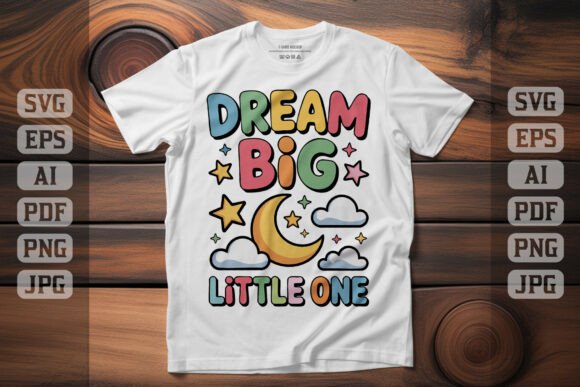
Dream Big Little One: A Designer's Review for Real Embroidery
When an embroidery design like Dream Big Little One comes across my screen, my first thought isn't about the digital file. It’s about the final, physical stitch. How will this look when it's pulled out of the hoop and actually worn, gifted, or sold? That’s the lens I’ll use here, thinking through this design’s potential for real projects.
The Immediate Mood and Where It Belongs
This Dream Big Little One design has a clear, sweet personality. The “Little Explorer” theme speaks directly to a sense of wonder, perfect for gifts and products celebrating childhood. The layout, with its central, hopeful message and surrounding space adventure elements, creates a balanced, focal point. It doesn’t feel overly busy, which is a great start for embroidery—too many tiny details can become a stitching nightmare.
My gut says this design naturally belongs on items meant to be cherished. Think custom baby onesies for a newborn gift, a personalized pillow cover for a nursery, or a cozy sweatshirt for a toddler. It has that “giftability” factor instantly. For small business owners, it’s a strong contender for holiday embroidery, say on a Christmas apron for a young mom or a special birthday tote bag.
Performance in Real-Life Embroidery Projects
Let’s picture a real scenario. I’m preparing a custom embroidered sweatshirt for a client’s grandchild. I’ve selected a soft, mid-weight cotton blend. The Dream Big Little One design is loaded. How would it perform?
On apparel like t-shirts, sweatshirts, and baby clothes, the design’s clarity is key. The lettering needs to be clear and not too dense to avoid a stiff, puckered feel on stretchy fabrics. The surrounding graphics should translate well into satin stitch and fill stitch areas without losing their charming shape. On a tote bag or a kitchen towel, where fabric is more stable, you could expect crisp, decorative results that add real value to a handmade product.
For crafters selling patches, this could be a lovely standalone embroidered patch, applied to a backpack or cap. For nursery decor, embroidered onto a blanket corner or a pillow, it becomes a lasting piece of art. In every case, the theme enhances the product’s story, which boosts customer engagement and trust in your craftsmanship.
Where to Use This Design With Care
Not every design fits every surface. For Dream Big Little One, pay close attention to scale. If the design is scaled down significantly for a small hoop size—think for a cap’s curved front or a tiny baby sock—those small details and lettering might lose definition. Test it first.
Dark fabric backgrounds require thoughtful thread color contrast; a pale, starry element might need a bright white or light blue to pop. On textured fabrics like some sweaters, the finer lines could get lost. And for products destined for frequent washing, like kids' apparel, ensure your stitch density and stabilizer choice make the embroidery durable and comfortable.
The design’s appeal relies on its clean presentation. On layered garments with seams or on curved surfaces, careful hooping and stabilization are non-negotiable to maintain that visual appeal.
Practical Notes for Embroidery Designers and Makers
Before committing this to a client project or your shop merchandise, here’s my standard practice list:
- Always test on scrap fabric first. Use the same material and weight as your final product. This reveals how the embroidery file handles the fabric’s texture and stretch.
- Check thread color contrast. Run mental—or actual—mockups on both light and dark backgrounds. Does the “Dream Big” message stand out?
- Review the stitch density in the preview. Are there areas so dense they might create a stiff patch? This is crucial for baby embroidery and soft apparel.
- Confirm your hoop size can accommodate the design at your desired size. Don’t assume.
- Inspect the small details. Zoom in on the digital embroidery file preview. Are there any corners or tiny accents that might be too fine for your machine or thread?
- Use proper stabilizer. This is the unsung hero of professional-looking finished products.
For commercial use, this is vital: check the licensing before selling finished items or digital products. Ensure the graphics or embroidery file is cleared for commercial embroidery if you’re a small shop owner or Etsy seller incorporating it into your craft business products.
Turning a Design Into a Trusted Product
A design like Dream Big Little One isn’t just stitches; it’s an asset. When embroidered well, it increases the perceived value of a handmade product. It shows attention to detail, which builds brand consistency for creative entrepreneurs. A parent receiving a baby blanket with this embroidered on it sees a personalized gift, not just a commodity.
For your business, it can become a recognizable item in your line of holiday embroidery or nursery decor. The professionalism comes from your execution—clean stitches, good placement, quality materials. That turns a cute digital embroidery design into a tangible product people love.
Final Real-World Judgment
Dream Big Little One T-shirt Design has the thematic charm and balanced layout that translates well into the physical world of embroidery. It’s suited for projects where warmth and inspiration are the goal. Its potential pitfalls are typical of any detailed design: watch the scale, the fabric choice, and the lettering clarity.
For embroidery designers, small business owners, and hobbyists looking for a design that sparks imagination in a finished product, this is a solid candidate. Approach it with practical preparation—test, check, stabilize—and it should reward you with a delightful embroidered piece that feels both professional and full of heart.